
Magnetic flux control since 1981
Impeder Cores
Order SMCs
Distributors
1-800-224-5522
Intl +1-248-393-2000
Induction coil services
Design, simulation, prototyping, manufacturing and quality checks for induction heating coils.
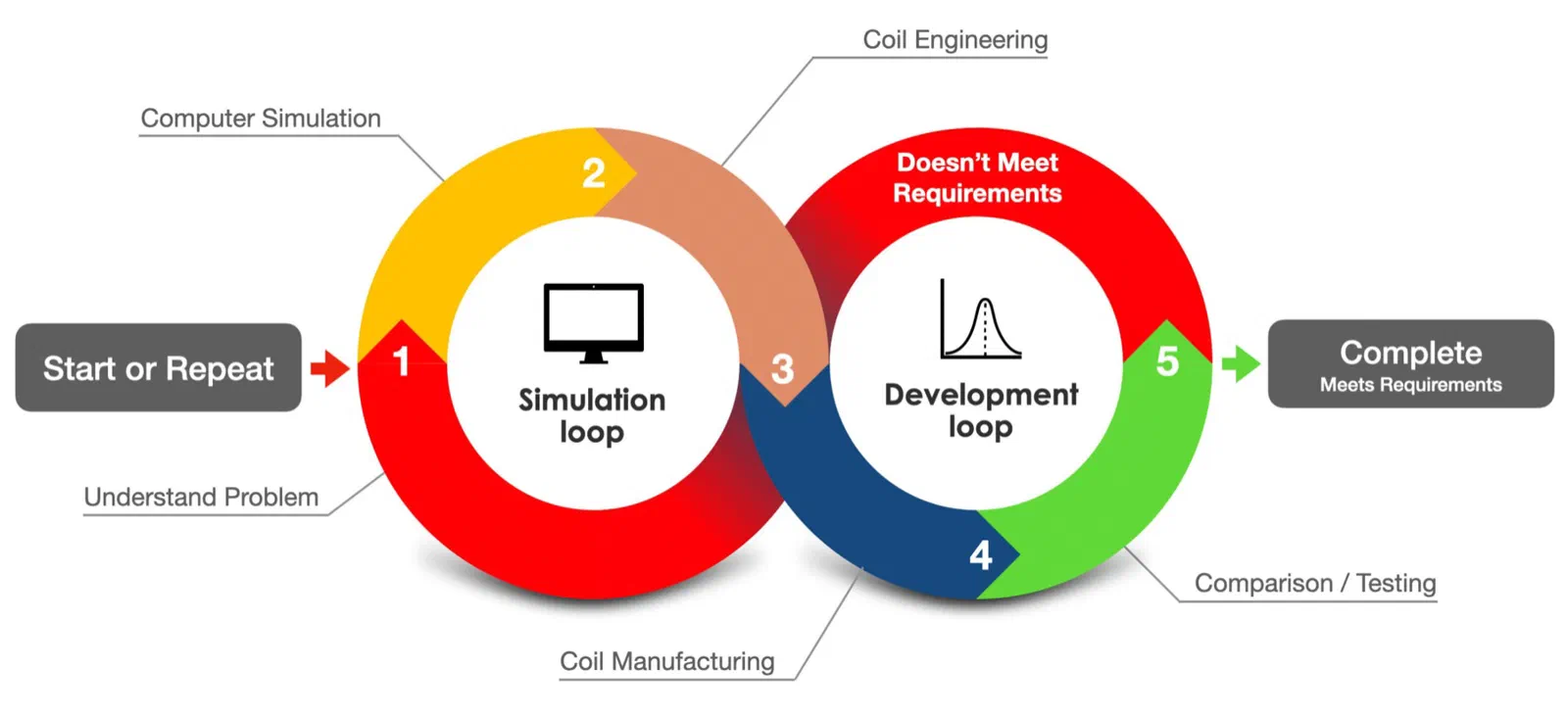
Fluxtrol’s induction coil services cover the full path from application description and computer simulation to coil engineering, manufacturing and testing. Two workflows serve customers building a new induction application and customers improving an existing one, both using Fluxtrol soft magnetic composites for magnetic flux control.
Fluxtrol’s induction heating production services follow two workflows: one for customers building a new induction coil or application, and one for customers improving an existing coil or application. Both help engineer the coil, select and properly install the correct Fluxtrol SMC materials, and launch the process into production. The sections below walk through each workflow, then follow a detailed hairpin coil example from simulation to test.

For customers that want to build a new induction heating coil or application, the Fluxtrol team follows this process:
For customers that want to improve an existing coil or application:

The example below follows the Fluxtrol pre-production workflow with Fluxtrol A. Many induction coil styles exist; a hairpin coil is used here for demonstration.
Hairpin coils are commonly used in the induction heating industry to heat flat and non-flat surfaces. Magnetic controllers, especially soft magnetic composites (SMCs), are common with hairpin coils to increase efficiency and heat control.
The goal is to compare the heating performance of a hairpin coil with and without SMCs. For an easy comparison, Fluxtrol A SMC is applied to half of the coil while the other half has no controller. The coil is attached to a robot for scanning, which is common practice. Computer simulation analyzes and predicts the heating of a stainless-steel sheet, and a coil is designed and manufactured from the simulation results for testing.
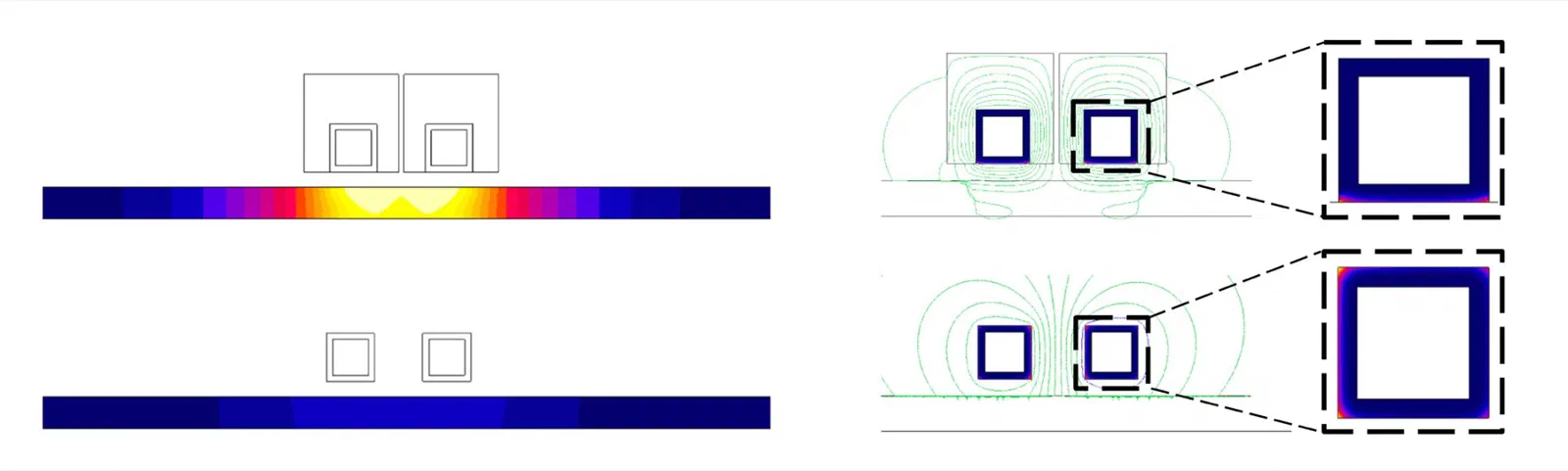
2D simulation. Plane-parallel static simulations using Flux 2D FEM software are run for both cross-sections. 2D is a simplification of the geometry and is sufficient in many cases. The results show a significant increase in temperature and efficiency for the hairpin coil with Fluxtrol A, for two reasons:
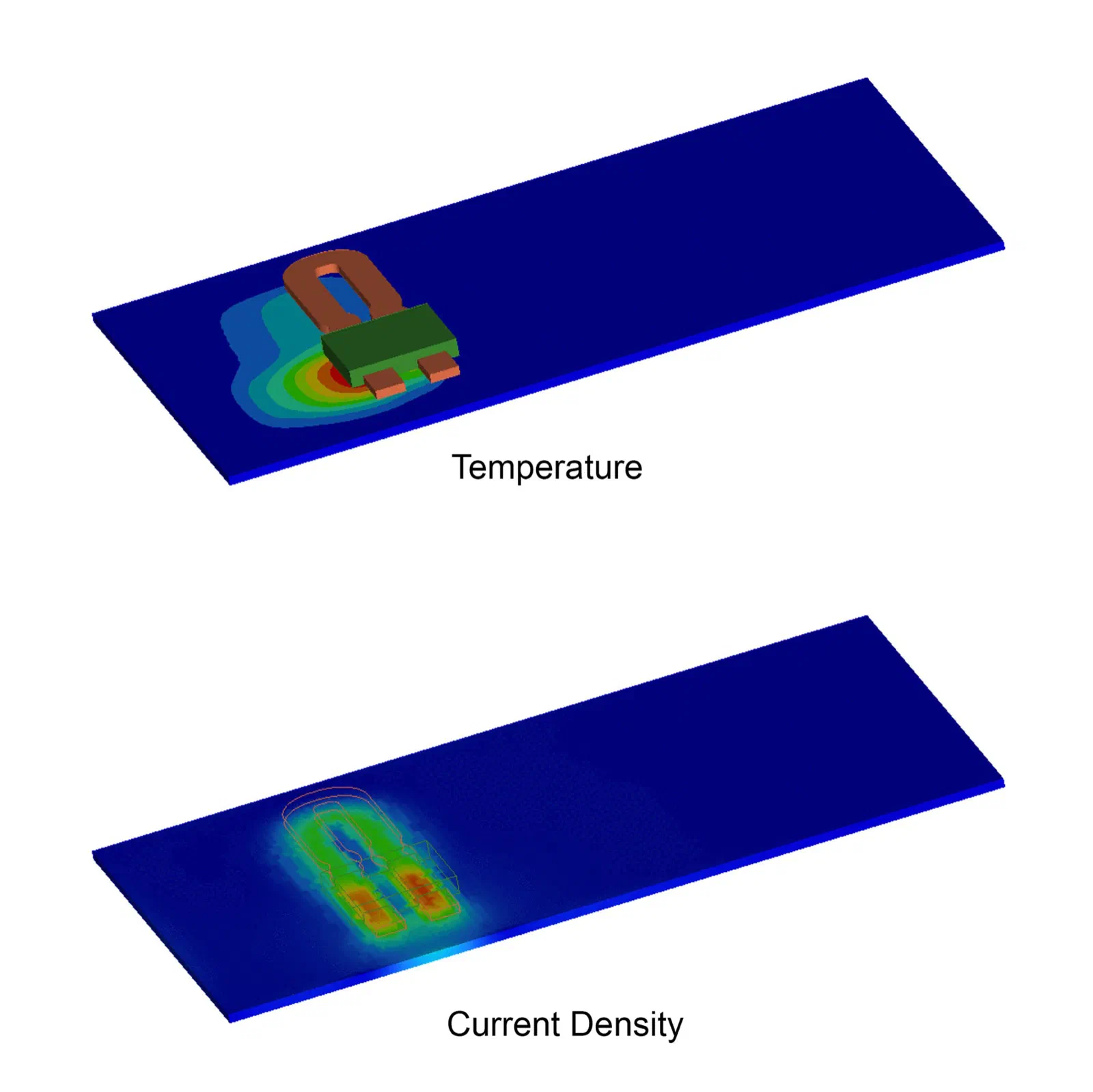
3D simulation, full comparison. Full-geometry scanning simulations using Flux 3D FEM software account for the whole geometry but need longer setup and solve times. As in 2D, the section with Fluxtrol A SMC showed a significant increase in temperature and efficiency.
Simulation also predicts electrical parameters such as voltage, current, power and inductance. These predictions are used to choose the proper power supply and its tuning parameters. See example simulations .
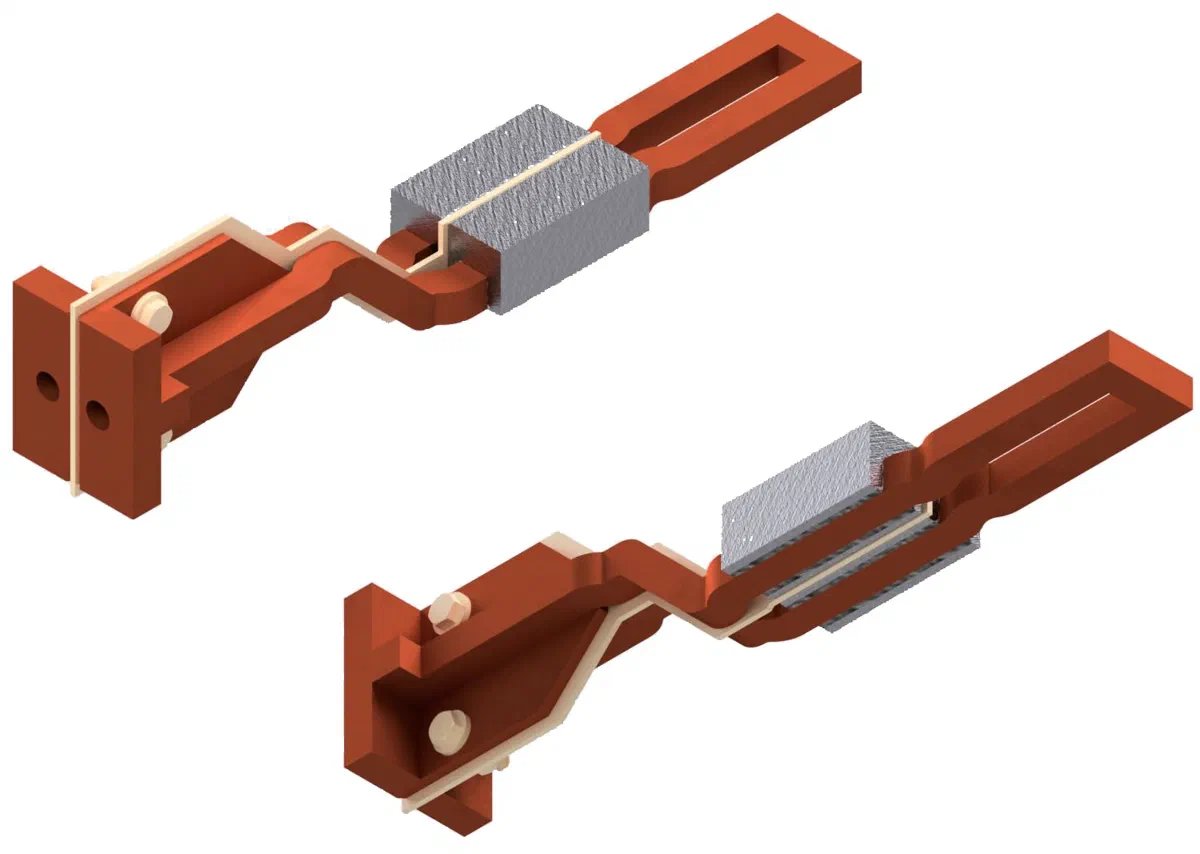
After simulation, the coil is fully drawn in 3D for manufacturing. The engineering stage completes all coil details, such as the coil head, SMC design, water cooling path, mechanical components and insulation.
Coils can be manufactured from copper tubing, machined copper, or both. In this hairpin coil, 1/2-inch rectangular copper tubing is used with Fluxtrol A SMC on one section, colored green. Rectangular tubing is more advantageous for SMC placement and adhesion, in addition to giving a flat heating face.
The coil was tested on an ABB robot arm, connected to an EFD power supply with a handheld transformer and a Dry Coolers closed-loop cooling system. The robot controlled the coil and scanned it over a stainless-steel sheet, following its curvature. The experiments behaved very much like the simulation: the Fluxtrol A section heated more than the section without SMC. Comparing simulation with experiment showed very strong agreement in the temperature distribution of the stainless-steel sheet.
Whether you are planning a new coil or trying to fix an existing one, contact Fluxtrol with your part, process and power supply. See also R&D services for consulting, modeling and training.
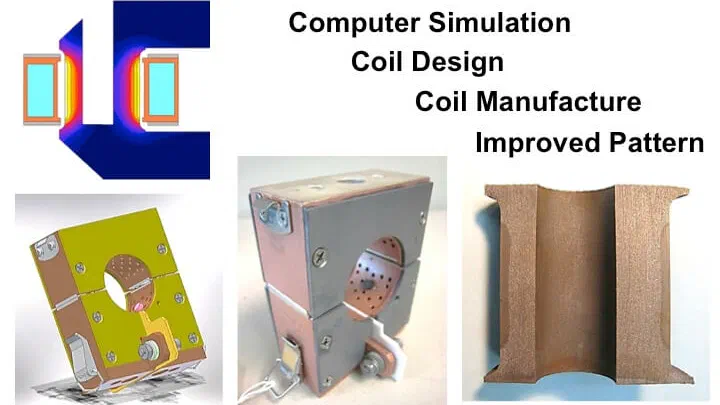
Fluxtrol designs induction heating coils using simulation, magnetic flux control and cooling design to meet heat patterns, power supply and …
Learn more →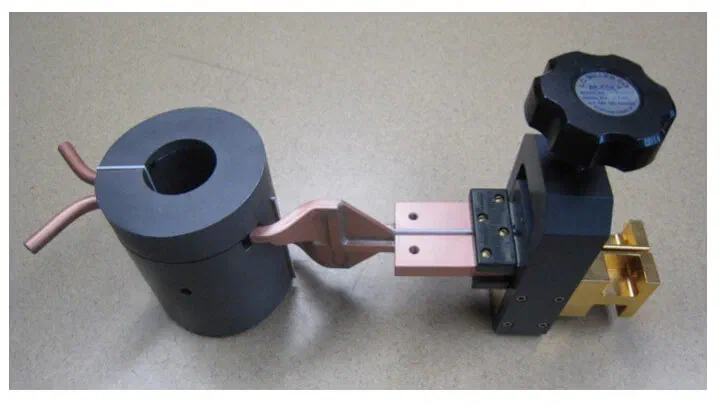
Fluxtrol's laboratory runs prototype induction coils on 500 W to 50 kW supplies from 3 to 2000 kHz, with thermal imaging to validate …
Learn more →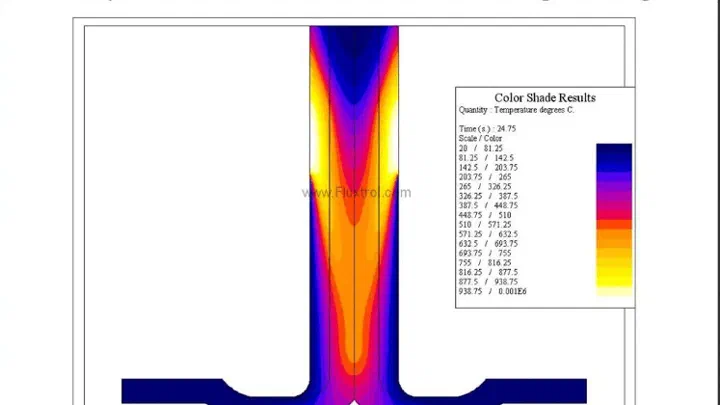
Fluxtrol begins nearly every induction coil project with ELTA and Flux 2D/3D simulation of heating, magnetic flux control and coil …
Learn more →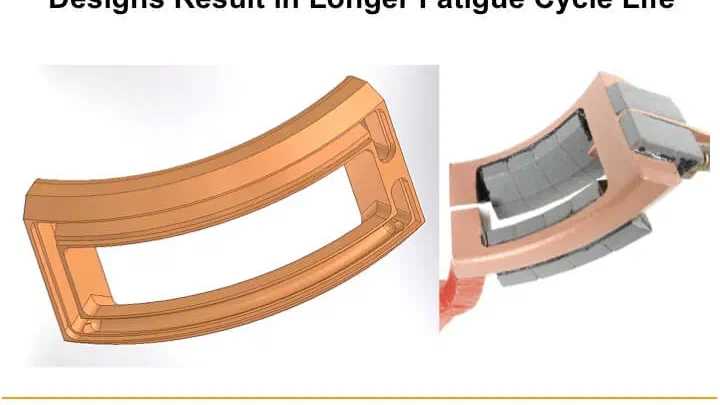
Induction coil manufacturing combines copper tubing, machined copper, silver brazing and flux controller attachment. See how Fluxtrol builds …
Learn more →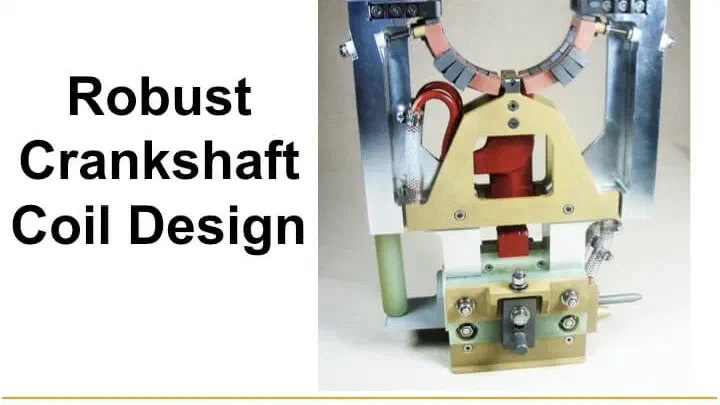
Induction coil quality starts with flux and oxide removal, leak and flow checks and inductance measurement before shipping. See Fluxtrol's …
Learn more →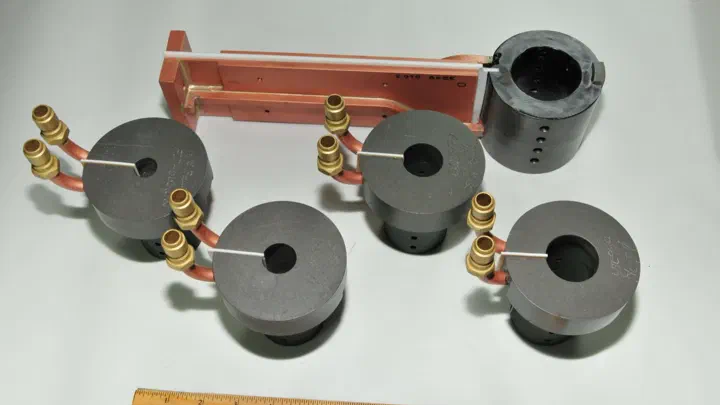
Custom magnetic flux controllers are machined or formed from soft magnetic composites to fit your induction coil. See materials, methods and …
Learn more →Talk with a Fluxtrol engineer about your coil, material or heat pattern challenge.