Resources

Technical Library

74 papers, articles and presentations on magnetic flux control, simulation, induction hardening, welding and more, with downloadable PDFs.

74 of 74 shown · Books · Patents

Tube welding & impedersArticle2026

Computational and Physical Simulation Methods for Off-Line Validation of Soft Magnetic Composite Impeder Performance

Yi Zhou, Daniel Günther, Igor Niedzwiecki, Martin Kroll, Egbert Baake, and Robert C. Goldstein

Abstract
High-frequency induction (HFI) tube welding is an energy-intensive process in which the impeder plays a critical role in power utilization. Conventional ferrite cores often operate near magnetic saturation in small-diameter applications, which can limit efficiency and process stability, particularly under high production rates. Soft magnetic composites (SMCs) offer higher saturation potential, but their internal behavior under welding conditions is difficult to assess experimentally. To address this challenge, this study proposes a methodology for evaluating impeder performance without relying on industrial-scale trials. The approach combines a three-dimensional electromagnetic–thermal model of the welding process with a reduced two-dimensional model for detailed analysis. The predictive capability of the 3D model was assessed through comparison with experimental measurements, providing an initial experimental validation under the investigated operating conditions. Based on this reference, a 2D model is derived by removing the tube and introducing an equivalent correction factor, obtained through comparison with the 3D results, to account for its influence. The reduced model is then used to investigate the internal thermal behavior of a representative SMC (Fluxtrol 50) impeder. The results reveal a pronounced hotspot in the region corresponding to the inductor position, with significantly higher temperatures than in other areas, indicating a critical thermal limitation for operation. The proposed methodology provides a reliable and efficient framework for analyzing and designing impeder systems, offering a practical alternative to costly industrial testing.
Tube welding & impedersPaper / presentation2025

Cooling Requirements for Soft Magnetic Composite Impeders in Inductive Tube Welding Installations

Robert C. Goldstein, D. Scott Mackenzie, Sean Muyskens, Sahadev Khatri · Fluxtrol Inc. Auburn Hills, USA; Quaker Houghton, Conshohocken, PA

Abstract
Milicevic, Miroslav & Nejkovic, Valentina. 2024 Proceedings of the Romanian Academy, Series A. Vol 25. pp 55-64. Implementation of Optimal HF Welding Procedure of Steel Pipes for High-Quality and Energy-Efficient Welds.
Tube welding & impedersPaper / presentation2025

Improved Sustainability of Induction Tube Welding Systems Using Soft Magnetic Composites

Rob Goldstein and Sean Muyskens

Abstract
M. Kącki, M. S. Rylko, J. G. Hayes and C. R. Sullivan, “Magnetic material selection for EMI filters,” 2017 IEEE Energy Conversion Congress and Exposition (ECCE), Cincinnati, OH, USA, 2017, pp. 2350-2356, doi: 10.1109/ECCE.2017.8096456.
Magnetic flux control & SMCsPaper / presentation2025

Induction Heating Simulation and Concentrator Use

Sean Muyskens and Ricardo Diaz

Tube welding & impedersBrochure2025

Induction Tube Welding with SMC Impeder Cores (brochure & presentations)

Induction hardeningPaper / presentation2025

Limitations of Standard Probes for the Measurement of Spray Quenching

Abstract
Figure 4. a) Heat transfer coefficient versus surface temperature for 12% polymer spray quench and 0.8 m/s spray quench from ELTA Database and b) resulting heat flux versus surface temperature
Steel & sustainabilityPaper / presentation2025

Rapid Induction Heating for Sustainable Manufacturing of Advanced High Strength Sheet Steels for Automotive Applications

Alec Williamson, Samuel Findley, Dominic Piccone, Colton Brown, Sam Nikolai, David Ulrich, Garrison Hommer, Rob Goldstein, Matthew McCosby, David Barbier, Laurent Lesne, Eliseo Hernandez, Malavikha Rajivmoorthy, Emmanuel De Moor, Lawrence Cho

Induction hardeningPaper / presentation2024

Effects of Surface Induction Hardening on the Torsional Fatigue Performance of Previously Carburized Modified 4121 Steel

Abstract
Rothleutner, “Assessment of the Microstructure and Torsional Fatigue Performance of an Induction Hardened Vanadium Microalloyed Medium-Carbon Steel,” Ph.D. Thesis, Colorado School of Mines, Golden, CO, 2015.
Tube welding & impedersPaper / presentation2023

Characterization of Soft Magnetic Composite Impeders

Sean Muyskens and Rob Goldstein FASM

Abstract
Our knowledgeable Customer Service team is available during business hours to answer your questions in regard to Fluxtrol product, pricing, ordering and other information. If you have technical questions about induction heating, material properties, our engineering and educational services, please contact our experts by phone, e-mail or mail.
Tube welding & impedersPaper / presentation2023

HES 23 Physical Simulation and Computational Modelling for Validation of Soft Magnetic Composite Impeder Performance

Sean M. Muyskens, David R. Morris, Christopher J. Yakey and Robert C. Goldstein · HES 2023 Padua, Italy

Abstract
Induction tube welding systems utilize an internal magnetic flux controller (impeder) to improve process efficiency. Work has previously been done showing that soft magnetic composite (SMC) materials may be suitable to improve these systems. A test stand was devised for the physical simulation of SMC impeder performance for use in induction tube welding systems. Tests were run to determine the loading and cooling conditions in which an impeder core made of SMCs could survive. Additionally, 2D thermal simulations were run to determine the cooling system thresholds given a particular magnetic loading of the core. The goal of these tests was to expand the design envelopes in which impeder cores made of SMCs could survive and validate their use in induction tube welding systems.
Tube welding & impedersPaper / presentation2023

IMAT 23 Soft Magnetic Composite Impeder Geometry Optimization

Sean M. Muyskens, Robert C. Goldstein · IMAT 2023 Detroit, Michigan

Abstract
Our knowledgeable Customer Service team is available during business hours to answer your questions in regard to Fluxtrol product, pricing, ordering and other information. If you have technical questions about induction heating, material properties, our engineering and educational services, please contact our experts by phone, e-mail or mail.
Materials testingArticle2023

Specimen Design, Heating Rate, and Temperature Gradients during Heating in an Induction Heated Dilatometer

Robert Cryderman, Finn Bamrud, Tareq Eddir, and Robert GoldsteinPublication: Journal of Materials Engineering and Performance, 2023

Abstract
Solid and hollow cylindrical specimens of ferrite–pearlite and austenitic stainless steel were induction heated at heating rates up to 600 °C·s−1 using a high precision DIL 805L dilatometer. High heating rates were attained for the magnetic state at temperatures below the curie (Ac2) temperature and reduced heating rates were observed for the non-magnetic austenite at temperatures above the Ac2. Heating the commonly used 4 mm diameter by 10 mm long specimens at rates above 50 °C·s−1 resulted in non-linear heating rates during transformation to austenite and large transient temperature variations along the specimen length. These limitations in heating rate and variances from ideal uniform heating lead to inaccurate measurement of the Ac1 temperature. Induction heating modeling showed that the specimen ends heated more slowly (colder ends) than the center for the magnetic ferrite structure and more rapidly (hotter ends) for the non-magnetic austenite structure. Changing the specimen design to a thin wall tube allowed faster heating rates and modified the pattern of temperature variations within the test sample. The response of selected specimen geometries to induction heating in the dilatometer was characterized by modeling and tests using multiple thermocouples to verify the models. The results demonstrated that the use of properly designed tubular test specimens can aid in more accurately determining the Ac1 transformation characteristics during heating at ultra-fast induction heating rates.
Tube welding & impedersPaper / presentation2022

IMAT 22 Physical Simulation and Computational Modelling for Validation of Soft Magnetic Composite Impeder Performance

Sean M. Muyskens, Robert C. Goldstein · IMAT 2022 New Orleans, Louisiana

Abstract
Our knowledgeable Customer Service team is available during business hours to answer your questions in regard to Fluxtrol product, pricing, ordering and other information. If you have technical questions about induction heating, material properties, our engineering and educational services, please contact our experts by phone, e-mail or mail.
Induction hardeningPaper / presentation2021

ASM HTS 21 3D Simulation of an Automotive Wheel Hub and Induction Hardening Coil to Solve Coil Lifetime Issues

Sean M. Muyskens, Tareq I. Eddir, Robert C. Goldstein · ASM HTS Heat Treat 2021 St. Louis, Missouri

Abstract
This paper will revisit a case study originally done for ASM HTS Conference in 2009. The goal then was to solve an induction coil lifetime issue of an induction coil for heat treatment of an automotive wheel hub. At the time, computer simulation was beginning to allow for full virtual prototyping of heat treat applications as an alternative to experimental testing. While practical knowledge allowed for the successful determination of the cause of short coil life, and iterative simulation led to implementation of a longer lasting coil that met the required pattern, simulation was not used at the time to pinpoint the cause of failure. As faster computing becomes more widely available and finite element analysis (FEA) improves in scope and accuracy, virtual prototyping and detection of these failure modes are becoming faster and lower cost options compared to the traditional test and trial method. To highlight the leaps made in virtual prototyping, this case study that was previously done as an axisymmetric 2D model will be done in 3D electromagnetic plus thermal with rotation for the full part.
Materials testingPaper / presentation2021

ASM HTS 21 Influence of Specimen Design on Maximum Heating Rate and Temperature Variation During Induction Heating in an 805L Dilatometer

Robert Cryderman (Colorado School of Mines), Finn Bamrud (Colorado School of Mines), Tareq Eddir (Fluxtrol Inc.), Robert C. Goldstein (Fluxtrol Inc.) · ASM HTS Heat Treat 2021 St. Louis, Missouri

Abstract

Commercially, carbon steels are induction heated at heating rates on the order of 100 to 1,000 °C·s-1 for surface hardening. The high precision DIL 805L dilatometer employs induction heating and is often used to study transformation characteristics and prepare test specimens for metallurgical analysis. However, heating the commonly used 4 mm diameter by 10 mm long specimens at rates above 50 °C·s-1 results in non-linear heating rates during transformation to austenite and large transient temperature variations along the specimen length. These limitations in heating rate and variances from ideal uniform heating can lead to inaccurate characterization of the transformation behavior compared to commercial induction hardening practices.

In this study it is shown that changing the specimen design to a thin wall tube allows faster heating rates up to 600 °C·s-1 and modifies the pattern of temperature variations within the test sample. The response of selected specimen geometries to induction heating in the dilatometer is characterized by modelling and tests using multiple thermocouples are used to verify the models. It is demonstrated that the use of properly designed tubular test specimens can aid in more accurately establishing transformation characteristics during commercial induction hardening.

Forging & formingPaper / presentation2021

IMAT 21 Investigating Temperature Profile in Induction Heated Billets and As-Cast Grain Structure Using Computer Simulation

Tareq Eddir (Fluxtrol Inc.), Robert C. Goldstein (Fluxtrol Inc.), Robert Haun (Anspanner LLC) · IMAT 2021 St. Louis, Missouri

Abstract
Powder Titanium is deposited from the top onto a billet being slowly pulled. The molten top of the billet (dashed circle) is heated through an induction heating coil. The black arrows indicate current direction in the coil, caster fingers, and load. The fingers are individually water-cooled to extract heat from the Joule losses and heat from transferred from the load.
Tube welding & impedersPaper / presentation2021

IMAT 21 Physical Simulation of Soft Magnetic Composite Impeder Performance

Sean M. Muyskens, Robert C. Goldstein · IMAT 2021 St. Louis, Missouri

Abstract

Induction tube welding is used for the continuous production of metallic tubes. These systems often utilize an internal magnetic flux controller (impeder) to improve process efficiency. Significant energy savings and increased productivity have been demonstrated both theoretically and practically when switching from the traditional ferrite impeder core, to one made of a soft magnetic composite (SMC) with high saturation flux density. In order to use SMCs in these systems it is important to balance the greater heat generated in these materials at higher fields with the cooling water available.

A test stand was devised for physical simulation of SMC impeder performance for use in induction tube welding systems. Tests were run to determine the loading and cooling conditions that an impeder core made of SMCs could survive. Additionally, loss estimates based on the rise in temperature from the cooling water were compared with published loss data for the SMCs used. The goal of these tests was to create a design envelope in which impeder cores made of SMCs could survive and validate their use in induction tube welding systems.

MeltingPaper / presentation2021

UIE 2021 Investigating the Benefit of Soft Magnetic Composite Inserts on Energy Efficiency in Cold Wall Billet Casters Using Computer Simulation

Tareq Eddir (Fluxtrol Inc.), Robert C. Goldstein (Fluxtrol Inc.), Robert Haun (Anspanner LLC) · UIE 2021 Pilsen, Czech Republic

Abstract
Powder Titanium is deposited from the top onto a billet being slowly pulled. The molten top of the billet (dashed circle) is heated through an induction heating coil. The black arrows indicate current direction in the coil, caster fingers, and load. The fingers are individually water-cooled to extract heat from the Joule losses and heat from transferred from the load.
Tube welding & impedersPaper / presentation2021

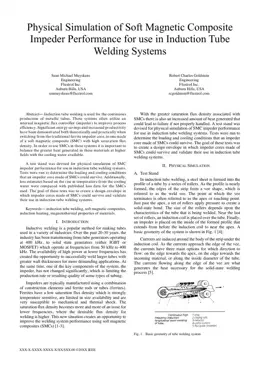
UIE 2021 Physical Simulation of Soft Magnetic Composite Impeder Performance for use in Induction Tube Welding Systems

Sean M. Muyskens, Robert C. Goldstein · UIE 2021 Pilsen, Czech Republic

Abstract

Induction tube welding is used for the continuous production of metallic tubes. These systems often utilize an internal magnetic flux controller (impeder) to improve process efficiency. Significant energy savings and increased productivity have been demonstrated both theoretically and practically when switching from the traditional ferrite impeder core, to one made of a soft magnetic composite (SMC) with high saturation flux density. In order to use SMCs in these systems it is important to balance the greater heat generated in these materials at higher fields with the cooling water available.

A test stand was devised for physical simulation of SMC impeder performance for use in induction tube welding systems. Tests were run to determine the loading and cooling conditions that an impeder core made of SMCs could survive. Additionally, loss estimates based on the rise in temperature from the cooling water were compared with published loss data for the SMCs used. The goal of these tests was to create a design envelope in which impeder cores made of SMCs could survive and validate their use in induction tube welding systems.

Induction hardeningPaper / presentation2019

ASM HTS 19 Improving Corrosion Resistance of Soft Magnetic Composites for Induction Heat Treating Applications

Prem Vaishnava, Mitchel Madeira, Doug Whittaker, Robert C. Goldstein · ASM HTS Heat Treat 2019 Detroit, Michigan

Abstract

Soft Magnetic Composites (SMCs) are widely used in Induction Heat Treating (IHT) applications to increase system efficiency, improving heat pattern control, and preventing undesired heating of adjacent areas of the work piece or machine components. SMCs consist of soft magnetic particles, individually insulated from one another by organic and/or inorganic materials. In most induction heat treating applications, the lifetime of an inductor is limited by the fatigue life of the copper. In severe applications, the lifetime is also limited by the lifetime of the magnetic flux controller. The typical source of failure in magnetic flux controller is corrosion caused by elevated temperature and exposure to the oxidizing agent such as quenchants and air surrounding the induction coil.

Coating SMCs can modify their surface properties and significantly enhance their corrosion resistance. In this paper, we have coated four commercially available SMCs with ceramic polymer-based coating materials with different surface preparation techniques. ASTM D1735 humidity test was performed for 168 hours. We found that with proper coating technology, the materials do not show degradation during the standardized testing.

Tube welding & impedersPaper / presentation2019

ASM HTS 19 Improving Inductive Welding System Performance with Soft Magnetic Composites

Sean M. Muyskens, Tareq I. Eddir, Robert C. Goldstein · ASM HTS Heat Treat 2019 Detroit, Michigan

Abstract

Inductive welding is a popular method for making metallic tubes used in a variety of industries. A majority of these induction tube welding systems use internal magnetic flux controllers (impeders) to limit the current flowing on the ID of the tube under the induction coil. As higher power, solid state IGBT power supplies become more widely available for tube welding, and demand for lower cost tubes with higher strength to weight ratios increases, magnetic loading of these impeders is also increasing. Traditionally, impeders are made of ferrites which have a low saturation flux density and can become saturated in these demanding conditions. Saturation of the impeder results in greater currents on the tube ID and lower process efficiency and weld quality. In order to expand the upper operating range of these more demanding systems while maintaining the weld quality, a change in impeder material from ferrites to soft magnetic composites (SMC) with greater saturation flux densities is suggested, as well as the addition of external magnetic controllers (bridges).

In this paper, a comparison is made between induction systems with impeders constructed from traditional ferrites and those utilizing bridges and impeders made from SMCs. To do this, a simulation study will be used to estimate impeder flux density, required coil current, and temperature distribution at the end of heating when using impeders made of the two materials, with and without bridges. By soft coupling 3-D electromagnetic models with 2-D electromagnetic and thermal models, a fast and accurate depiction of the welding process can be achieved. A case study is presented comparing simulation results to experimental results.

Materials testingPaper / presentation2019

ASM HTS 19 Short Time Dilatometry Quench System Analyses

Andrew L. Banka (Airflow Sciences Corporation), Robert C. Goldstein (Fluxtrol Inc.), Robert L. Cryderman (Colorado School of Mines), Tareq Eddir (Fluxtrol Inc.), Andrew Senita (Airflow Sciences Corporation) · ASM HTS Heat Treat 2019 Detroit, Michigan

Abstract

Dilatometry test systems are commonly used for characterizing the transformation behavior in steels using induction heating for the heating source and gas flow for the cooling source. In these systems, the steel test article is assumed to have a uniform temperature throughout the sample. The accuracy of this assumption depends on the design of the induction heating and gas cooling systems, as well as the time scales for heating and cooling. Previous papers by the authors have shown the variations in temperature that occur during heating and cooling for a TA Instruments DIL805 dilatometer (dilatometer).

Investigations were carried out for development of an improved heating/cooling system for this dilatometer using electromagnetic and thermal analyses for the induction coil and CFD analyses for the high-pressure gas cooling system. Electromagnetic analyses showed that a novel cooling system could be incorporated, though higher power would be required to maintain the same heating rate. While the improved cooling system showed promise on an idealized basis, full CFD modeling shows that the system would not provide improved cooling due to complex flow dynamics.

Tube welding & impedersPaper / presentation2019

HES 19 Improving Induction Tube Welding System Performance Utilizing Soft Magnetic Composites

Sean M. Muyskens, Tareq I. Eddir, Robert C. Goldstein · HES 19 Padova, ItalyPublished Journal: COMPEL, 2019

Abstract
Most induction tube welding systems use internal magnetic flux controllers (impeders) to limit the amount of current flowing on the ID of the tube under the face of the induction coil. More difficult applications of tube welding, such as smaller diameter tubing with thicker walls, can lead to high magnetic loading of the impeder. Traditional materials for the impeder are ferrites, which have low saturation flux densities, and can easily become saturated in these systems. This increases the amount of current flowing on the ID of the tube and leads to inefficient heating or inability to form a proper weld. To maintain process efficiency and weld quality in these applications, a switch in impeder material to soft magnetic composites (SMCs) with higher saturation flux density is suggested. In this paper, a comparison is made between impeders constructed from traditional ferrite materials, and SMCs. To make this comparison, a hybrid method of simulating the induction tube welding process was created utilizing a combination of 2-D and 3-D coupled models. By soft coupling 3-D electromagnetic models with 2-D electromagnetic and thermal models, a fast and accurate depiction of the welding process can be achieved. A case study is presented comparing ferrite and SMC impeders in a representative induction tube welding application.
Tube welding & impedersArticle2019

Improving Induction Tube Welding System Performance Utilizing Soft Magnetic Composites

Sean M. Muyskens, Tareq I. Eddir, Robert C. GoldsteinPublication: COMPEL, 2019

Abstract

Purpose: This paper aims to demonstrate the benefits of using different impeder materials for induction tube welding systems.

Design/methodology/approach: To show the difference in using various impeder materials, a new approach was taken to model tube welding systems in two and three dimensions. Three-dimensional (3-D) electromagnetic models were used to determine the current distribution along the weld vee as well as the permeability of the tube along the length of the welding system. Two-dimensional (2-D) coupled electromagnetic plus thermal models with rotational movement were used to determine the temperature distribution in the heat-affected zone.

Findings: Simulation results suggest upwards of 25 percent system power savings when using a soft magnetic composite (SMC) impeder rather than the traditional ferrites.

Research limitations/implications: There is currently a lack of experimental data to validate the models, but future work will include comparison of models to real-world trials.

Practical implications: When dealing with tube welding systems, there are possibilities to improve process efficiency or increase production quality and output by improving the impeder material.

Originality/value: While simulations of tube welding systems have been done previously, studies on improving impeder materials are rarely carried out. This paper brings to light possible improvements to be made to induction tube welding systems.

Keywords: Induction heating, Soft magnetic materials, Material modeling, Thermal analysis

Paper type: Research Paper

Magnetic flux control & SMCsPaper / presentation2019

Magnetic Core Loss Behavior at High Fields in Magnetic Materials

Prem P. Vaishnava, Robert C. Goldstein · HES 19 Padova, Italy

Abstract
Many induction heating coils use soft magnetic composite materials (SMCs) to improve induction system performance. In demanding induction heating applications, the core loss in the soft magnetic composite material is one of the critical factors in predicting the reliability of the induction coil using computer modelling. In this paper we have used calorimetry method for experimentally determining core losses in SMCs up to ≈1 T magnetic flux densities at a frequency near 150 kHz. This paper contains a discussion on the limitations of current methods for calculating core losses. To address these limitations, a new method for calculating core losses is presented. Using the new method, the results of the core loss measurement did not fit well with traditional core loss models over the full range of magnetic flux densities. A discussion on the different models and a hypothesis for the source of the variation from the models is presented.
Materials testingPaper / presentation2018

Influence of Heating Rates on Temperature Gradients in Short Time Dilatometry Testing

Tareq Eddir, Robert Goldstein, Ethan Buchner, Emmanuel De Moor, Robert Cryderman · IFHTSE TPIM 18 Spartanburg, South Carolina

Abstract

Dilatometry test systems are commonly used for characterizing the transformation behavior in steels and induction heating is frequently selected as the heating source. In these systems, the steel test specimen is assumed to have a uniform temperature throughout the sample. This is a good assumption for slow heating rates with small specimens, however, for induction hardening heating rates this may not be accurate. Using computer models, it is possible to predict the temperature dynamics of the sample, both radially and axially, during heating.

O1 tool steel in the quenched condition was utilized to characterize and model heating temperature gradients. The case of a 50°C/s heating rate was presented previously [1]. In this study, specimens instrumented with multiple thermocouples were induction heated at rates up to 500 °C/s. The test data and geometry were evaluated with 2-D models to characterize transient temperature gradients. The goal of the modeling is to better characterize temperature corrections required when rapid heating is used to determine transformation behavior during rapid induction heating. This paper presents the data for faster heating rates and quantifies the impact of the different heating rates on the dynamic temperature distributions in the sample.

Forging & formingPaper / presentation2018

Thermomechanical Processing for Creating Bi-Metal Bearing Bushings

Bernd-Arno Behrens, Robert Goldstein, Anna Chugreeva · IFHTSE TPIM 18 Spartanburg, South Carolina

Abstract
Over the last years, multi-material design aiming on manufacturing of application-optimized technical components has been gaining in importance. In this context, combination of steel and aluminum offers an effective solution for implementation of lightweight concepts due to its high strength-to-weight ratio. The steel can be placed in high-stressed areas, where high performance properties are required, while the aluminum can be used for the rest of the part, in order to save the component total weight. Due to dissimilar material properties of steel and aluminum, the process design for bi-metal forming is very challenging and requires a process-specific heating strategy, which development is in focus of this paper. The current study involves the potential for creating bi-metal bearing bushings consisting of steel 20MnCr5 and aluminum AA-6082 by closed-die-forging. Firstly, an overview of modern technologies for bi-metal forming is given. In following, the scientific issues and demanding challenges within this study are described for both, heating and subsequent forming. Results of the initial computer modeling and experimental validation of the heating behavior are presented. Subsequently, the experimental forging tests were conducted with achieved temperature gradients. The forged parts were metallographically investigated to examine the resulting quality of the joining zone. Based on the obtained findings, the optimization proposals for the entire process are discussed.
Forging & formingPaper / presentation2018

Thermomechanical Processing of Friction Welded Steel-Aluminum Billets to Improve Joining Zone Properties

Bernd-Arno Behrens, Robert Goldstein, David Guisbert, Deniz Duran · IFHTSE TPIM 18 Spartanburg, South Carolina

Abstract

Bi-material machine components are fabricated usually by joining two individual components which are already given their near-final or final form. These are then put into operation either directly or upon a finishing process. Contrary to that, researchers of the Collaborative Research Centre “CRC 1153” Tailored Forming are investigating novel process chains, in which different materials are joined in the first step and then subjected to further processing, i.e., forming, machining and heat treatment. By this means, the joining zone properties, which are adversely affected due to the joining process, can be treated and improved via thermomechanical processing during forming. On the other hand, process-specific challenges arise especially for workpieces consisting of dissimilar materials, i.e., steel and aluminum. In order to obtain a favorable flow behavior of the materials in the vicinity of the joining zone, a near step-function temperature distribution in the bi-material billet is desirable. Induction heating is viewed as the most promising method to be used for this purpose.

At the Heat Treat 2017 conferences, a paper was presented which discussed the strategy for thermomechanical processing and the modeling of the first concept for the induction heating process [1]. The current study builds on the previous paper and presents the modeling of the forming process along with the analysis of the first prototype samples formed using the technology. A metallurgical evaluation of the joining zone properties of the prototype components after thermomechanical processing will be presented. Additional considerations will be given on how to further improve the process and move towards a production capable process.

Induction hardeningPaper / presentation2017

Applications of Induction Heat Treating

Robert Goldstein · ASM HTS 17 Cleveland, OH

Abstract
Induction Heating is a Contactless Heating Method of bodies, which absorb energy from an Alternating Magnetic Field, generated by Induction Heating Coil (Inductor).
GeneralPaper / presentation2017

Applications of Induction Heating Enabling Advancement in Materials Science

Robert Goldstein · 2017 Colorado School of Mines

Abstract
“Additive Manufacturing (AM) is an appropriate name to describe the technologies that build 3D objects by adding layer-upon-layer of material, whether the material is plastic, metal, concrete or one day…..human tissue.” www.additivemanufacturing.com
Induction hardeningPaper / presentation2017

Building the Materials Database to Unlock the Potential of Induction Heat Treating

Robert Goldstein, Robert Cryderman · UIE Congress Hannover, Germany

Abstract
$$$$ – Opportunity for 1/3 weight reduction compared to other cold formable steels at lower cost or nearly 50% cost reduction over hot stamped steel. – Courtesy of SFP Works dba FlashBainite
Induction hardeningPaper / presentation2017

Influence of Vanadium Microalloying on the Microstructure of Induction Hardened 1045 Steel Shafts

Lee M. Rothleutner, Chester J. Van Tyne, Robert Goldstein, John Jackowski, and Greg Fett · HT 2017

Abstract
Vanadium microalloying additions are common in medium carbon ferrite-pearlite steel shafts. The increased load capacity provided by vanadium carbonitride precipitation is beneficial in many applications. Induction hardening can further increase the surface strength of a component; however, the implications of the vanadium carbonitride precipitates on microstructural evolution during induction hardening are unclear. Evidence that vanadium microalloying influences the microstructural evolution of the induction hardened case as well as the case/core transition regions are presented in the current study. Vanadium increases the amount of non-martensitic transformation products in the case while decreasing austenite formation kinetics in the case/core transition region. Observations in induction-hardened shafts were supported by Gleeble® physical simulations of computer simulated thermal profiles. Characterization was conducted using scanning electron microscopy, dilatometry, and microhardness testing.
Materials testingPaper / presentation2017

Modeling of Short Time Dilatometry Testing of High Carbon Steels

Robert Goldstein, Ethan Buchner, Robert Cryderman · Colorado School of Mines

Abstract

Dilatometry test systems are commonly used for characterizing the transformation behavior in steels and induction heating is commonly the heating source. In these systems, the steel test article is assumed to have a uniform temperature throughout the sample. This is a good assumption for slow heating rates with small samples, however, for induction hardening cycles this may or may not be accurate. Using computer models, it is possible to predict the temperature dynamics of the sample, both radially and axially, during the thermal processing cycle (heating and cooling).

O1 tool steel was utilized to characterize and model heating and cooling temperature gradients. Specimens instrumented with multiple thermocouples were induction heated and gas quenched. The test data and geometry were evaluated with 1-D and 2-D models to characterize transient temperature gradients. The goal of the modeling is to better characterize temperature corrections required when rapid heating and cooling processes are used to determine transformation behavior in induction hardenable steels.

Forging & formingPaper / presentation2017

Role of Thermal Processing in Tailored Forming Technology for Manufacturing Multi-Material Components

Robert Goldstein, Bernd-Arno Behrens, Deniz Duran · ASM HTS 17 Cleveland, OH

Abstract
The demand for lightweight, high performance components continues to grow in the transportation industry. However, the inevitable trade-off between strength, weight and cost is a limiting factor in design and implementation of many technologies. Load adapted tailored components with locally varying properties offer a potential solution to this problem. In sheet forming industry, use of tailored blanks has increased notably in the last two decades, whereas utilization of such concept is relatively new to bulk metal forming industry. The researchers have been exploring new possibilities for suitable process chains to manufacture massive hybrid components. The process chain involves manufacturing processes of joining, forming, heat treatment and machining. The interface characteristics between the two materials are decisive in the performance of the manufactured component. In this study, manufacturing of a bi-material shaft by tailored forming is covered. First of all, an overview of the tailored forming technology is given with an emphasis on the joining zone treatment by thermal and thermomechanical processing. In the following, a numerical and experimental analysis of induction heating of bi-material workpieces is presented.
Induction hardeningArticle2017

Striation effect in induction heating: myths and reality

Robert Goldstein, Valentin NemkovPublication: IEEE COMPEL, 2017

Abstract

Purpose – Effect of unstable “wavy” temperature distribution on the part surface during the process of induction heating of ferromagnetic materials was observed and reported by two Russian scientists in 1940 (Babat and Lozinskii, 1940). They reported that under certain conditions, one can observe periodical or quasi-periodical bright stripes on the part surface when its temperature passes through the Curie point. In time, these stripes expand and merge, forming a normal temperature pattern. They called this phenomenon “polosatiy nagrev” (striation heating). Let us call it the “zebra effect” for simplicity. It can exist for a relatively long time, from several seconds to several tens of seconds. Several explanations of the zebra effect were proposed with not very convincing arguments.

Design/methodology/approach – Wider spreading of induction technology and use of computer simulation of induction processes create a demand and open new possibilities for study of the zebra effect. This study provides an overview of the available information about the zebra effect and gives new explanation of this phenomenon based on existing experimental data and new results of simulation. Conditions for zebra occurrence and its technological importance or limitations are discussed.

Findings – Computer simulation using the Flux 2D program allows to demonstrate the striation (zebra) effect that can appear in the process of heating magnetic materials and reproduce main experimental findings related to this effect. Simulation provides a great opportunity to investigate the zebra phenomenon in virtual reality, providing qualitatively correct results. Results of simulation show that the zebra effect can appear in a relatively narrow range of material properties and operating conditions. The main factor is a big enough gradient of permeability near the Curie point. At present, it is difficult to expect high quantitative accuracy of simulation due to multiple assumptions in simulation algorithms and insufficient or inaccurate information about the material properties near the Curie point.

Originality/value – Several explanations of the zebra effect were proposed with not very convincing arguments. There were concerns that the zebra effect could set significant limits on the use of induction heating for surface hardening due to non-uniform temperature distribution along the part (Babat and Lozinskii, 1940; Babat, 1965; Lozinskii, 1949, 1969). However, it did not happen. There were no complaints from scientists or practitioners regarding any negative effect of the zebra phenomenon. Moreover, the authors of this paper did not find any original publications on this issue for more than half a century. Only few old induction experts confirm that they observed the zebra effect or something similar, whereas a great majority of induction community members never heard about it.

Keywords – Computer simulation, Induction heating, Electromagnetic induction, Curie point

Paper type – Technical paper

Forging & formingPaper / presentation2016

Effects of Microalloy Additions and Thermomechanical Processing on Austenite Grain Size Control in Induction-Hardenable Medium Carbon Steel Bar Rolling

B. M. Whitley, J. G. Speer, R. L. Cryderman, R. C. Goldstein, K. O. Findley and D. K. Matlock · Thermec 2016 Graz, AustriaKeywords: thermomechanical processing, microalloy, austenite conditioning, induction hardening, physical simulation, hot torsion, prior austenite grain size

Abstract
Three AISI 1045 steels: a base steel, one modified with vanadium (V), and one modified with V and niobium (Nb) were studied to evaluate microstructural conditioning prior to induction hardening. Simulated bar rolling histories were evaluated using fixed-end hot torsion tests with a Gleeble® 3500. The effects of chemical composition and thermomechanical treatment on final microstructures were examined through analysis of laboratory simulations of steel bar rolling and induction hardening processes in order to provide additional insights into the morphological evolution of austenite of microalloyed steels. Analysis of prior austenite grain size (PAGS) is complemented with analysis of austenite recrystallization and pancaking during rolling. The potential for utilizing TMP, in conjunction with microalloy additions, to enhance bar steel microstructures and subsequent performance is assessed by evaluating the induction hardening response of each steel systematically processed with different preconditioning treatments.
Forging & formingPaper / presentation2016

Hot Hydroforging of Lightweight Bimaterial Gears and Hollow Products

Bulent Chavdar, Robert Goldstein, Lynn Ferguson · IFHTSE 2016 Savannah, GA

Abstract

Feasibility of making lightweight powertrain products with hot hydroforging of steel/low density material hybrid billets is explored. A bimaterial billet is designed such that a steel wall encloses a low density core 100%. Furthermore the low density core is selected among the materials that have lower melting or softening temperature than steel such as aluminum and glass. In hot hydroforging the bimaterial billet is heated to 1000-1200 C range similar to the conventional hot forging of steel. However, in hot hydroforging the core is in liquid or viscous state while steel shell is in solid state similar to the conventional hydroforming. During hot hydroforging the viscous/liquid core has negligible resistance to flow thereby providing a uniform hydrostatic pressure inside the steel and enabling a uniform deformation of the solid steel wall.

Steel/aluminum bimetal billets were prepared. Then, the bimetal billets were hot hydroforged in closed dies in one blow. A uniform steel wall thickness was observed all around the forged part upon cross sectioning. However, there was also a large shrinkage void in the aluminum core. The large shrinkage void is formed due to the CTE mismatch between steel and aluminum and the volume increase of aluminum during phase change. The large shrinkage void can be eliminated if aluminum is replaced by glass that has a matching CTE to that of steel. Furthermore, glass does not have to be fully melted at forging temperatures thereby mitigating the risks of phase change. On the other hand the molten aluminum core can be emptied out of steel shell after forging thereby giving rise to the novel concept of “investment forging”. A hollow part with uniform steel shell can be formed for the ultimate weight and cost reductions. For example investment forging of hollow steel valves for engine applications is feasible by hot hydroforging.

Induction hardeningPaper / presentation2016

Integrated Computational Development of Induction Heat Treatment Process for Automotive Axle Shafts

Robert Goldstein, Dr. Valentin Nemkov, Dr. Lynn Ferguson, Dr. Zhichao Li · MS&T 2016

Abstract
Our knowledgeable Customer Service team is available during business hours to answer your questions in regard to Fluxtrol product, pricing, ordering and other information. If you have technical questions about induction heating, material properties, our engineering and educational services, please contact our experts by phone, e-mail or mail.
Forging & formingPaper / presentation2016

Modeling of the Heating Sequences of Lightweight Steel/Aluminum Bimaterial Billets for Hot Forging and Hot Hydroforging

Robert Goldstein, Bulent Chavdar, Lynn Ferguson · IFHTSE 2016 Savannah, GA

Abstract

Recently, a concept to produce lightweight products by hot forging a steel shell that had a lightweight core was presented that could lead to component weight savings up to 50%. Some targeted products are gears, valves, and flanges. The steel shell is envisioned to carry most of the load in a target application while the lightweight core serves as a space holder during the forming process. After forming, the lightweight material may either remain in the component and contribute to the load carrying capacity, or be emptied out to achieve the ultimate weight reduction.

In this paper, the concept studied is hot forged from a bimetal billet, which is a steel tube press fit with a solid aluminum core and welded shut with steel end caps. For the experimental part of the studies Al 7075 was selected as the core material due to its high strength to weight ratio and 1020 steel was selected because of its availability as a tube. Induction heating was selected as the heating method for bimetal forging. This is due to the ability of induction heating to rapidly heat the steel layer. Successful bimetal forging of a closed vessel requires the steel layer to be in the austenite phase prior to the aluminum reaching high temperatures to prevent compromising the weld seams. Modeling of the induction heating process is complex due to the dimensional movement of components during the process. A method was developed to accurately model the induction heating process and predict power requirements. The method will be described and the results of the models will be compared to experimental findings. The forming process will be discussed in another paper at the conference. The simulation presented is for solid state forging of a steel aluminum billet, but the method for modeling the process is the same for hot hydroforging or other material combinations.

Induction hardeningPaper / presentation2016

Striation Effect in Induction Heating: Myths and Reality

Robert Goldstein, Valentin Nemkov · HES 2016 Padua, Italy

Abstract
Effect of unstable “wavy” temperature distribution on the part surface during the process of induction heating of ferromagnetic materials was observed and reported by two Russian scientists in 1940 [1]. They reported that under certain conditions one can observe periodical or quasi-periodical bright stripes on the part surface when its temperature passes thru the Curie point. In time these stripes expand and merge, forming a normal temperature pattern. They called this phenomenon “polosatiy nagrev” (striation heating). Let us call it “zebra effect” for simplicity. It can exist for a relatively long time, from several seconds to several tens of seconds. Several explanations of zebra effect were proposed with not very convincing arguments. There were concerns that zebra effect could set significant limits on use of induction heating for surface hardening due to non-uniform temperature distribution along the part [1-4]. However it did not happen. There were no complaints from scientists or practitioners regarding any negative effect of zebra phenomenon. Moreover, the authors of this paper did not find any original publications on this issue for more than half a century. Only few old induction experts confirm that they observed zebra effect or something similar while a great majority of induction community members never heard about it. Wider spreading of induction technology and use of computer simulation of induction processes create a demand and opens new possibilities for study of zebra effect. Current presentation provides an overview of available information about zebra effect and gives new explanation of this phenomenon based on existing experimental data and new results of simulation. Conditions for zebra occurrence and it technological importance or limitations are discussed.
Induction hardeningPaper / presentation2015

Best Practice for Design and Manufacturing of Heat Treating Inductors – ASM

C. Yakey, V. Nemkov, R. Goldstein, J. Jackowski · ASM HTS 15 Detroit, MI

Abstract
With the use of good design practices, one can improve coil longevity and improve production quality. By eliminating failure points in the initial design, proper material selection, improved cooling and proper magnetic flux control, induction tooling life can be increased. Computer simulation has been proven to be an effective tool for predicting not only electromagnetic parameters of a designed system, but also heat patterns in a given part and in the induction coil itself. When a coil has magnetic flux controllers present, their influence may also be predicted by computer simulation. With an extensive library of published case histories in induction coil design and performance evaluations, we are confident with the use of these tools and proper coil geometries and implementation, production life and quality can be improved on most induction heat treating inductors. These design practices have been used by the authors for over 20 years with proven results. A case is examined of a CVJ stem hardening coil, in which the principles discussed can be applied to most other hardening coils.
Emerging technologiesPaper / presentation2015

Characterization of Carbon Fiber Reinforced Thermoplastics for Induction Processing

John K. Jackowski, Robert C. Goldstein, Valentin S. Nemkov · Aeromat 2015

Abstract
Our knowledgeable Customer Service team is available during business hours to answer your questions in regard to Fluxtrol product, pricing, ordering and other information. If you have technical questions about induction heating, material properties, our engineering and educational services, please contact our experts by phone, e-mail or mail.
Induction hardeningPaper / presentation2015

Effect of Steel Hardenability on Stress Formation in an Induction Hardened Axle Shaft

Zhichao (Charlie), B. Lynn Ferguson, V. Nemkov, Robert Goldstein, John Jackowski, and Greg Fett · ASM HTS 15 Detroit, MI

Abstract
Previous work was reported on the induction hardening process for a 1541 steel axle shaft. This presentation compares the previous results with the stress formation dynamics in the same shaft made from steels with lower hardenability. Hardened using a scan heating method and a trailing PAG spray quench, several steels having lower hardenability were modeled using the same heating schedule so that the depth of austenite formation is similar in all cases. During spray quenching, the hardened case is shallower as steel hardenability is reduced. This leads to differences in the magnitude of compressive and tensile stresses and their distributions. In turn, the potential for internal cracking is reduced as the stress transition zone is altered by the thickness of the diffusive phase layer between the martensitic case and the ferrite-pearlite core of the shaft. The next step is to investigate these effects on the torque carrying ability of the shaft.
Forging & formingPaper / presentation2015

Hot Hydroforging for Lightweighting – IDE

Bulent Chavdar, Robert Goldstein, Xi Yang, Jacob Butkovich, Lynn Ferguson · IDE 15 Bremen, Germany

Abstract
Feasibility of making lightweight powertrain products with hot hydroforging of steel/low density material hybrid billets is explored. A bimaterial billet is designed such that a steel shell encloses a low density core 100%. Furthermore the low density core is selected among the materials that have lower melting or softening temperature than steel such as aluminum and glass. In hot hydroforging the bimaterial billet is heated to 1000-1200 C range similar to the conventional hot forging of steel. However, in hot hydroforging the core is in liquid or viscous state while steel shell is in solid state similar to the conventional hydroforming. During hot hydroforging the viscous/liquid core has negligible resistance to flow thereby providing a uniform hydrostatic pressure inside the steel and enabling a uniform deformation of the solid steel shell.
Simulation & modelingPaper / presentation2015

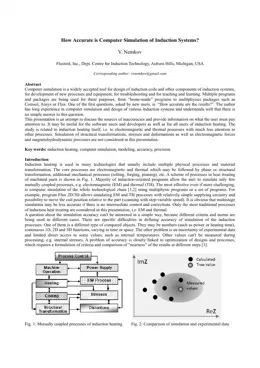
How Accurate is Computer Simulation of Induction Systems?

V. Nemkov · EPM 15 Cannes, France

Abstract

Computer simulation is a widely accepted tool for design of induction coils and other components of induction systems, for development of new processes and equipment, for troubleshooting and for teaching and learning. Multiple programs and packages are being used for these purposes, from “home-made” programs to multiphysics packages such as Comsol, Ansys or Flux. One of the first questions, asked by new users, is: “How accurate are the results?”. The author has long experience in computer simulation and design of various induction systems and understands well that there is no simple answer to this question.

This presentation is an attempt to discuss the sources of inaccuracies and provide information on what the user must pay attention to. It may be useful for the software users and developers as well as for all users of induction heating. The study is related to induction heating itself, i.e. to electromagnetic and thermal processes with much less attention to other processes. Simulation of structural transformations, stresses and deformations as well as electromagnetic forces and magnetohydrodynamic processes are not considered in this presentation.

Induction hardeningArticle2014

Design and Fabrication of Inductors for Induction Heat Treating

R. Goldstein, W. Stuehr and M. BlackPublication: ASM International, 2014

Abstract
FOR INDUCTION MELTING AND MASS HEATING, the early induction heating coils were manufactured from copper tubing wrapped in multiple turns around a mandrel. The first induction heat treating coils were developed for crankshaft hardening in the 1930s (Fig. 1, 2) (Ref 1–4). Unlike the melting and mass heating coils, the heat treating induction heating coils were machined. These inductors consisted of two parts with a hinge on one side that would open and shut around the crankshaft journal. Quench holes were drilled on the inner diameter of the induction heating coil to deliver quench to the part after heating. This pioneering development was the culmination of many years of hard work by a large team and clearly demonstrated the different requirements for induction heat treating as compared to melting and mass heating.
Emerging technologiesPaper / presentation2014

Induction Process and Coil Design for Welding of Carbon Fiber Reinforced Thermoplastics

John K. Jackowski, Robert C. Goldstein, Valentin S. Nemkov · SAMPE 14 Seattle, WA

Abstract
Being contactless and volumetric, Induction heating has proven to be an effective method for producing high strength weld joints between Carbon Fiber Reinforced Thermoplastic (CFRT) components. There are inherent challenges with the implementation of this technology due to the anisotropic nature of CFRT. The anisotropic electrical and thermal properties of CFRT plate are described. The properties are inputted to a FEA program for electromagnetic and thermal simulation. The program is used to design an induction coil with a goal of achieving uniform temperature distribution in a lap joint between two CFRT plates. Effect of frequency, material orientation, and coil design is examined.
Magnetic flux control & SMCsArticle2014

Magnetic Flux Control in Induction Systems

V. Nemkov

Abstract
Magnetic flux controllers are widely used in induction heating systems for concentration, shielding or redistribution of the magnetic field which generates power in the part to be heated. Controllers, made of Soft Magnetic Composites (SMC), provide accurate heat pattern control, improve parameters of inductors and performance of the entire installation. In melting systems, especially in the case of vacuum furnaces, cold crucible and other specialty furnaces, the magnetic control can provide large energy savings, magnetic field shielding, shorter melting cycles and optimized field distribution for enhancement of the metallurgical processes. Due to the diversity of applications, service conditions of controllers are very different including very severe cases. Mechanical, magnetic, electrical, thermal and other properties must be considered in design and application of SMC. This article describes properties and performance of SMC typically used in induction heating technology. Several presented case stories are based on more than 20 years of R&D and practical experience of scientists and practitioners at Fluxtrol, Inc. Presented material may be interesting not only for induction heating community but also for all people using AC magnetic fields in technological processes.
Emerging technologiesPaper / presentation2014

Modeling Induction Heat Distribution in Carbon Fiber Reinforced Thermoplastics

Robert C. Goldstein, John K. Jackowski, Valentin S. Nemkov · IFHTSE 2014

Abstract
Being contactless and volumetric, induction heating has proven to be an effective method for producing high strength weld joints between Carbon Fiber Reinforced Thermoplastic (CFRT) components. There are inherent challenges with the implementation of this technology due to the anisotropic nature of CFRT. The anisotropic electrical and thermal properties of CFRT plate are described. The properties are inputted to a FEA program for electromagnetic and thermal simulation. The program is used to design an induction coil with a goal of achieving uniform temperature distribution in a lap joint between two CFRT plates. Effect of frequency, material orientation, and coil design is examined.
Simulation & modelingPaper / presentation2014

Simulation of Induction Heating of Slabs using ELTA 6.0

V. Nemkov, V. Bukanin, A. Zenkov, A. Ivanov · MEP 14 Hannover, Germany

Abstract
Presentation is devoted to simulation of slab heating in the longitudinal magnetic field. There were many studies of this technology in the past, but they were mainly related to heating materials with linear properties. One of the problems in slab heating simulation is a 3D character of the electromagnetic (EM) and thermal (T) processes. New program ELTA 6.0 has an option of 2D FDM simulation of EM and T processes in combination with semi-analytical account for the finite length of the system. Presentation contains a short survey of history and state-of-art of slab heating. New simulation procedure and a study of the edge effect variation during high temperature heating of the magnetic slab are presented. Example of simulation for multi-stage heating of big steel slab illustrates the theoretical considerations.
Induction hardeningPaper / presentation2013

Effect of Spray Quenching Rate on Distortion and Residual Stresses during Induction Hardening of a Full-Float Truck Axle

Zhichao (Charlie) Li and B. Lynn Ferguson, Valentin Nemkov, Robert Goldstein and John Jackowski, Greg Fett · ASM HTS 13 Indianapolis, IN

Abstract
Computer simulation is used to predict the residual stresses and distortion of a full-float truck axle that has been induction scan hardened. Flux2D® is used to model the electromagnetic behavior and the power distributions inside the axle in terms of time. The power distributions are imported and mapped into DANTE® model for thermal, phase transformation and stress analysis. The truck axle has three main geometrical regions: the flange/fillet, the shaft, and the spline. Both induction heating and spray quenching processes have significant effect on the quenching results: distortion and residual stress distributions. In this study, the effects of spray quenching severity on residual stresses and distortion are investigated using modeling. The spray quenching rate can be adjusted by spray nozzle design, ratio of polymer solution and quenchant flow rate. Different quenching rates are modeled by assigning different heat transfer coefficients as thermal boundary conditions during spray quenching. In this paper, three heat transfer coefficients, 5K, 12K, and 25K W/(m2·C) are applied with keeping all other conditions same. With the understanding of effects of heating and quenching on residual stresses and distortion of induction hardened parts, the induction hardening process can be optimized for improved part performance.
Coil designPaper / presentation2013

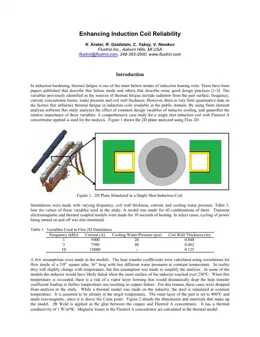
Enhancing Induction Coil Reliability

Kreter, Goldstein, Yakey, Nemkov · ASM HTS 13 Indianapolis, IN

Abstract
In induction hardening, thermal fatigue is one of the main failure modes of induction heating coils. There have been papers published that describe this failure mode and others that describe some good design practices [1-3]. The variables previously identified as the sources of thermal fatigue include radiation from the part surface, frequency, current, concentrator losses, water pressure and coil wall thickness. However, there is very little quantitative data on the factors that influence thermal fatigue in induction coils available in the public domain. By using finite element analysis software this study analyzes the effect of common design variables of inductor cooling, and quantifies the relative importance of these variables. A comprehensive case study for a single shot induction coil with Fluxtrol A concentrator applied is used for the analysis. Figure 1 shows the 2D plane analyzed using Flux 2D.
Magnetic flux control & SMCsPaper / presentation2013

Magnetic Flux Control in Induction Installations

V. Nemkov · HES 13 Padua, Italy

Abstract
It is well known that performance of some induction systems may be significantly improved by application of magnetic flux controllers [1,2]. They are used to concentrate, shield and/or redistribute the magnetic field which generates power in the part. Theoretical and practical evidences are presented in the paper, which show that there is still significant potential for improvement in innovative and traditional induction technologies due to magnetic flux control. Utilizing magnetic flux controllers in heat treating processes results in excellent heat pattern control and improvement of parameters of inductors and entire power delivery systems. In melting systems, especially in the case of vacuum furnaces, cold crucible and other specialty furnaces, the magnetic control can provide energy savings, magnetic field shielding, shorter melting cycles and optimized field distribution for metallurgical processes. Comparison of different groups of materials for magnetic flux control (laminations, ferrites and Soft Magnetic Composites, aka Magnetodielectrics) is also presented in the paper. Several examples of magnetic flux control illustrate the presented material based on more than 20 years of R&D and practical experience of scientists and practitioners at Fluxtrol Inc.
Induction hardeningPaper / presentation2013

Modeling Stress and Distortion of Full-Float Truck Axle During Induction Hardening Process

Dr. Lynn Ferguson, Dr. Zhichao Li, Dr. Valentin Nemkov, Robert Goldstein, John Jackowski, Greg Fett · HES 13 Padua, Italy

Abstract
Computer simulation of induction heat treating processes is relatively widespread within the industry. The bulk of the simulation studies considered coupling two of the multiple phenomena that occur during the process: 1) the electromagnetic and thermal process, and 2) the metallurgical and thermal-stress process. Recent studies have incorporated more of the mutually coupled phenomena into the simulation process. In these studies, electromagnetic, thermal, metallurgical, stress and shape change were coupled together using multiple programs. These studies enhanced our capabilities to predict the actual part performance of induction hardening process. This paper describes a study of a complex induction hardening process of a full-float truck axle. The process includes a dwell heating of the flange and a scan hardening of the shaft and spline. Computer simulation of electromagnetic and thermal processes was made using Flux software. The power densities from Flux are then exported and mapped into the DANTE for thermal, metallurgical, stress and distortion simulation. The study is based upon component test data from Dana Corporation.
MeltingPaper / presentation2013

Modeling and Optimization of Cold Crucible Furnaces for Melting Metals

V. Nemkov, R. Goldstein, K. Kreter, and J. Jackowski · HES 13 Padua, Italy

Abstract
Cold Crucible Furnaces (CCFs), widely used in multiple special applications of melting metals, oxides, glasses and other materials [1], are essentially 3D devices and their modeling is a complicated task. Multiple studies of CCFs have been made for their optimization, but their electrical efficiency is still low; for metals approximately 25-30% and even lower. Fluxtrol, Inc., made an extensive study of electromagnetic processes of CCFs using computer simulation and laboratory tests. This study showed that electrical efficiency of CCFs may be strongly improved by means of optimal design of the whole system with use of magnetic flux controllers. Theoretical results had been confirmed by laboratory tests on mockups and by industrial tests with real melting processes. The presentation contains a description of the computer modeling procedure and major findings. They form a basis for optimal design of electromagnetic systems of CCFs.
MeltingPaper / presentation2013

Recent Design and Operational Developments of Cold Wall Induction Melting Crucibles for Reactive Metals Processing

R. Haun, M. Charles, R. Lampson, P. Meese, V. S. Nemkov, R. Goldstein, K. Kreter · HES 13 Padua, Italy

Abstract
Retech Systems, LLC has been involved with the design, fabrication, and sales of cold wall induction melting systems for about 30 years. Over the past four years, Retech Systems, LLC together with Fluxtrol, Inc., has been evaluating the use of magnetic flux controllers to enhance electrical efficiency, power factor, and overall performance of the cold wall melting crucible. An open bottom, ten segment, water-cooled copper crucible was designed and built to include magnetic flux controllers. 55 mm diameter titanium alloy ingots were cast using either a 12 turn or a 14 turn induction coil with and without the use of magnetic flux controllers. Relevant tank circuit measurements were made to assess the electrical performance of each configuration. A 31% increase in casting rate was measured using magnetic flux controllers located in between the segments of the crucible and around the outer periphery of the induction coil. The increased power input available to the melt also resulted in a significant improvement in ingot surface finish, as determined by a qualitative examination.
Brazing & solderingPaper / presentation2013

Simulation of Induction System for Brazing of Squirrel Cage Rotor

V. Vologdin, Vl. Vologdin, Jr., V. Nemkov, and K. Kreter · HES 13 Padua, Italy

Abstract

Induction heating is the most progressive method for brazing of squirrel cage (SC) type rotors of electric motors. Frequencies from 3 to 10 kHz are typically being used for brazing of relatively large rotors (diameter more than 200 mm). If the ring thickness exceeds its height, flat single or two-turn inductors with concentrator are located under the ring instead of the round coil surrounding the ring. The rotor is standing on the top of the coil providing high pressure onto the joint components; a gap between the coil and ring is minimal and constant during the heating process.

This study describes a modified system with concentrator made of magnetic composite Fluxtrol 100. Frequency was much higher (around 50 kHz) than traditionally used (3-10 kHz). Electromagnetic and thermal coupled simulation with Flux 2D used to compare the process parameters and temperature distribution dynamics at 3 and 50 kHz. It was found that at higher frequency the brazing quality and time are approximately the same as at lower frequency. Electrical efficiency is slightly higher at 50 kHz while the coil current is significantly lower. Computer simulation at different powers showed that for a larger rotor the minimum required power is 70-75 kW. At lower power brazing time quickly increases and at 50 kW reaches 16 min instead of 5 min at 75 kW. Electrodynamic forces between the coil and rotor at 75 kW equal to 250 N at 50 kHz and almost 950 N at 3 kHz.

Thermal simulation of the coil proved that the maximum temperature of Fluxtrol 100 concentrator is below 200 C, which is acceptable for this material. Experimental and then industrial tests confirmed the results of simulation.

Emerging technologiesPaper / presentation2012

Modified Solenoid Coil That Efficiently Produces High Amplitude AC Magnetic Fields with Enhanced Uniformity for Biomedical Applications

V. Nemkov, R. Ruffini, R. Goldstein, J. Jackowski, T. L. DeWeese, R. IvkovPublication: IEEE TRANSACTIONS ON MAGNETICS, VOL. 48, NO. 1

Abstract
This is a continuation of studies previously reported [1] with the primary focus of optimizing an inductor design. The potential benefits of hyperthermia for cancer therapy, particularly metastatic cancers of the prostate, may be realized by the use of targeted magnetic nanoparticles that are heated by alternating magnetic fields (AMF). To further explore the potential of this technology, a high-throughput cell culture treatment system is needed. The AMF requirements for this research present challenges to the design and manufacture of an induction system because a high flux density field at high frequency must be created in a relatively large volume. Additional challenges are presented by the requirement that the inductor must maintain an operating temperature between 35 °C and 39 °C with continuous duty operation for one hour or longer. Results of simulation and design of two devices for culture samples and for in-vitro tests of multiple samples in uniform field is described.
Induction hardeningPaper / presentation2011

Stress and Distortion Evolution During Induction Case Hardening of Tube

Dr. Valentin Nemkov, Mr. Robert Goldstein, Mr. John Jackowski · 26th ASM HTS Cincinnati, OH

Abstract
Simulation of stresses during heat treating relates usually to furnace heating. Induction heating provides very different evolution of temperature in the part and therefore different stresses. This may be positive for service properties or negative, reducing component strength or even causing cracks. A method of coupled simulation between electromagnetic, thermal, structural, stress and deformation phenomena during induction tube hardening is described. Commercial software package ELTA is used to calculate the power density distribution in the load resulting from the induction heating process. The program DANTE is used to predict temperature distribution, phase transformations, stress state and deformation during heating and quenching. Analysis of stress and deformation evolution was made on a simple case of induction hardening of external (1st case) and internal (2nd case) surfaces of a thick-walled tubular body.
Emerging technologiesPaper / presentation2010

Design of Induction Coil For Generating Magnetic Field For Cancer Hyperthermia Research

V. Nemkov, R. Ruffini, R. Goldstein, J. Jackowski, T.L. DeWeese and R. Ivkov · HES 10/COMPEL Padua, Italy

Abstract
The purpose of this paper is to continue studies previously reported with the primary focus of optimizing an inductor design. The potential benefits of hyperthermia for cancer therapy, particularly metastatic cancers of the prostate, may be realized by the use of targeted magnetic nanoparticles that are heated by alternating magnetic fields (AMFs).
Magnetic flux control & SMCsPaper / presentation2010

Temperature Prediction and Thermal Management for Composite Magnetic Controllers of Induction Coils

V. Nemkov, R. Goldstein, J. Jackowski, N. Vyshinskaya, C. Yakey · HES 10 Padua, Italy

Abstract
Temperature control of magnetic controllers (concentrators, cores, shields, shunts) is an essential part of the induction coil design. Prediction and study of the coil copper have been described in a presentation “Influence of Cooling Conditions on Induction Coil Copper Temperatures” (V. Nemkov, R. Goldstein) [1]. That study was made using Flux 2D computer simulation program. The present study is devoted to temperature prediction and control in both copper and magnetic controller. Computer simulation with programs Flux 2D was used for modeling of the whole coil head operating conditions. Flux 2D has no standard option to account for magnetic losses in the concentrator material and their influence on the concentrator temperature. Special procedure has been developed to solve this problem. A case study illustrates the calculation procedure and influence of the coil head design, frequency, controller material selection and application technology on the controller temperature. New composite magnetic materials and temperature management methods are also described.
Induction hardeningPaper / presentation2009

Advanced Induction Heat Treatment Technologies and Design Methods

Magnetic flux control & SMCsPaper / presentation2009

Composite Materials for Magnetic Field Control in EPM

V. Nemkov, R. Ruffini, A. Kolesnichenko · EPM Dresden, Germany

Abstract
Electromagnetic processing of materials requires generation of magnetic field in a very wide range of frequencies (from DC to several hundred kilohertz) and intensities (up to 12 T). AC magnetic systems are used for material stirring, casting, pouring control, transportation, forming etc. These systems typically may have magnetic circuits made of soft magnetic materials: laminations, ferrites and Soft Magnetic Composites (SMC) also known as Magnetodielectric Materials (MDM). Each type of materials has different electrical, magnetic and mechanical characteristics. This presentation gives an overview of characteristics of different soft magnetic materials and perspective of their use in the electromagnetic processing of materials. Main attention is paid to MDM, a relatively new type of materials. Presentation is based on experience of the authors, literature and discussions with experts in different industries.
Induction hardeningPaper / presentation2009

Integration of Induction Heat Treat Simulation into Manufacturing Cycle

Induction hardeningPaper / presentation2009

Virtual Prototyping of Induction Heat Treating

Robert C. Goldstein, Valentin Nemkov and John Jackowski · 25th ASM HTS Indianapolis, IN

Abstract
The time between a product’s definition and production is constantly shrinking. To meet these requirements, extensive use of virtual prototyping has replaced physical models in the mechanical design process. As a result of this, the induction heat treating process developer will often times not receive a quantity of parts for heat treatment until a few weeks prior to having to deliver samples. This makes it nearly impossible to produce good quality parts on time using a traditional test and trial method. The development focus shifts to “just getting a pattern” rather than developing a robust production process. To meet the modern development requirements, the same methods that have led to significant improvements in the mechanical design process are applied to induction heat treating. Virtual prototyping tools include electromagnetic, thermal and metallurgical finite element analysis along with 3-D CAD software. Virtual prototyping allows for the study of a much larger design space in a shorter period of time at lower cost. Final process validation is preformed on real equipment. A case story of an induction heat treating process of wheel hub hardening developed with virtual prototyping is presented. Savings achieved with the virtual tools are discussed.
Induction hardeningPaper / presentation2008

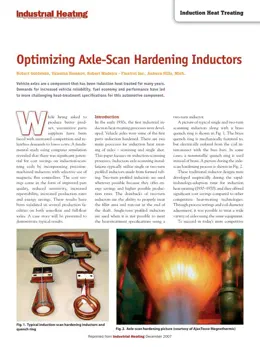
Use of Frequency Control to Optimize Induction Axle Scan Hardening

Valentin Nemkov, Robert Goldstein · UIE Katowice, Poland

Abstract

This presentation is a continuation of the optimal design analysis of scanning process and inductors for scan hardening of axles that had been reported in 2007 in two publications [1,2] and in presentation at a conference HES-07 in Padua, Italy [3]. Improvements based on coil optimization at two frequencies (1 and 3 kHz) have been reported in these presentations. Current article describes what additional improvements may be achieved when two frequnces are used during the process of heat treating.

Vehicle axles are parts that have been induction heat treated for many years. Demands for increased vehicle reliability, fuel economy and performance have led to more challenging heat treatment specifications for axles. While being asked to produce better product, the automotive parts suppliers face an increased competition and relentless demands to lower costs.

Coil designArticle2007

Increasing Inductor Life by Predicting Coil Copper Temperatures

Induction hardeningArticle2006

Optimizing Axle-Scan Hardening Inductors

R. Goldstein, V. Nemkov and R. MadeiraMagazine: Industrial Heating, December 2006

Abstract
Vehicle axles are a component that has been induction heat treated for many years. Demands for increased vehicle reliability, fuel economy and performance have led to more challenging heat-treatment specifications for this automotive component.
Induction hardeningArticle2006

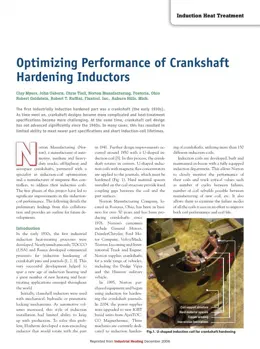
Optimizing Performance of Crankshaft Hardening Inductors

C. Myers, J. Osborn, C. Tiell, R. Goldstein and R. RuffiniMagazine: Industrial Heating, December 2006

Abstract
The first industrially induction hardened part was a crankshaft (the early 1930s). As time went on, crankshaft designs became more complicated and heat-treatment specifications became more challenging. At the same time, crankshaft coil design has not advanced significantly since the 1960s. In many cases, this has resulted in limited ability to meet newer part specifications and short induction-coil lifetimes.
Emerging technologiesPaper / presentation2005

Application of High Amplitude Alternating Magnetic Fields for Induction of Nanoparticles Localized in Cancer

Robert Ivkov, Sally J. DeNardo, Wolfgang Daum, Allan R. Foreman, Robert C. Goldstein, Valentin S. Nemkov, and Gerald L. DeNardoConference/Publication: Journal of Clinical Cancer Research 11 (19 suppl)

Abstract

Methods – Thirty-seven female BALB/c athymic nude mice (5-8 weeks) were exposed to an AMF with frequency of 153 kHz, and amplitude (400-1,300 Oe), duration (1-20 minutes ), duty (15-100%), and pulse ON time (2-1,200 seconds). Mice were placed in a water-cooled four-turn helical induction coil. Two additional mice, used as controls, were placed in the coil but received no AMF exposure. Tissue and core temperatures as the response were measured in situ and recorded at 1-second intervals.

Results – No adverse effects were observed for AMF amplitudes of V700 Oe, even at continuous power application (100% duty) for up to 20 minutes. Mice exposed to AMF amplitudes in excess of 950 Oe experienced morbidity and injury when the duty exceeded 50%.

Conclusion –High-amplitude AMF (up to 1,300 Oe) was well tolerated provided the duty was adjusted to dissipate heat. Results presented suggest that further tissue temperature regulation can be achieved with suitable variations of pulse width for a given amplitude and duty combination. These results suggest that it is possible to apply high-amplitude AMF (>500Oe) with pulsing for a time sufficient to treat cancer tissue in which magnetic nanoparticles have been embedded.

Brazing & solderingArticle2003

Computer-Assisted Induction Aluminum Brazing

R.C. Goldstein, V.S. Nemkov and R.T. RuffiniMagazine: Industrial Heating, November 2003

Abstract
Coupled electromagnetic and thermal computer simulation provides a sufficient basis for process optimization and quality improvement in an aluminum-brazing application.

Books

Image

Induction Heating Installations: Course Book

Nov. 11, 2015
Energoizdat, Leningrad, 1981, 328 p., in Russian
by A.E. Slukhotsky, V.S. Nemkov, N.A. Pavlov and A.V. Bamuner
Image

ASM Handbook Volume 4C: Induction Heating and Heat Treatment

ASM International, 2014

by R. Goldstein, W. Stuehr and M. Black

by R. Goldstein
Image

Handbook of Thermal Process Modeling Steels

CRC Press, 2009, 740 p., edited by Cemil Gur, Jiansheng Pan

Chapter 10: Modeling of Induction Hardening Processes, pp. 427-499

by V. Nemkov

Image

History of Induction Heating and Melting

Vulkan-Verlag GmbH, 2008, 202 p.
by A. Muehlbauer
V. Nemkov: book editing, chapter 7: Design and Calculation Methods
Image

Handbook of Metallurgical Process Design

CRC Press, 2004, 984 p. Edited by George E. Totten, Kiyoshi Funatani and Lin Xie

Chapter 15: Design Principles for Induction Heating and Hardening

by Dr. Valentin Nemkov and Robert Goldstein
Image

Induction Heating Industrial Applications

UIE, “Induction Heating” working group, France, 1992, 144 p.

Chapter 1: Fundamentals

by Dr. Valentin Nemkov

Image

Theory and Calculation of Induction Heating Devices

Energoatomizdat, Leningrad, 1988, 280 p., in Russian by V.S. Nemkov and V.B. Demidovich
Image

Mathematical Modeling of High Frequency Heating

Polytechnica, Leningrad, 1991, 80 p., in Russian by V.S. Nemkov, B.S. Polevodov, and S.G. Gurevich

Patents

YearInventorSubject MatterPatent No.
2008Nemkov, Valentin; Madzharov, NikolaySealing device for producing sealed packages of a pourable food productAT389527T
2007Nemkov, Valentin; Madzharov, NikolaySealing device and method for producing packages of pourable food productsWO2007138372
2006Nemkov, Valentin; Goldstein, Robert et al.Therapy via targeted delivery of nanoscale particlesWO2004071370
2000Ruffini, Robert S.; Nemkov, ValentinHeat treating of metallurgic article with varying aspect ratiosUS6166360
2000Nemkov, Valentin; Cherico, StephenHigh Frequency Induction FusingUS6162509
1999Nemkov, Valentin; Cherico, StephenHigh Frequency Induction FusingZA9806813
1984Ruffini, Robert S.Inductor, coating and methodUS4486641

Year

Company Involvement

Subject Matter

Patent No.

2014

Amass Energy LLC

Device and methods for processing carbon based materials

8,668,810

1994

Armco Steel Company, L.P.

Induction heated meniscus coating vessel

5,460,651

1993

Armco Steel Company, L.P.

Induction heated meniscus coating vessel

5,339,329

1996

Avco Corporation

Method for densifying and refurbishing brakes

5,547,717

1995

Avco Corporation

Apparatus for densification of porous billets

5,389,152

2007

Baker Hughes Inc.

Antenna core material for use in MWD resistivity measurements and NMR measurements

7,235,970

2006

Baker Hughes Inc.

Method and apparatus of reducing ringing in a nuclear magnetic resonance probe

7,084,625

2005

Baker Hughes Inc.

Method and apparatus of reducing ringing in a nuclear magnetic resonance probe

6,844,727

1999

Borg-Warner Automotive, Inc.

Clutch assembly having reaction force circuit

5,884,738

2001

BorgWarner Inc.

Dual clutch rear axle and method of operation

6,327,935

2006

Comaintel, Inc.

Induction heating work coil

7,022,951

2009

Contour Hardening, Inc.

Induction driven ignition system

7,533,643

2013

Enteroptyx

Induction heater system for shape memory medical implants and method of activating shape memory medical implants within the mammalian body

8,382,834

1995

Essex Specialty Products, Inc.

Apparatus for heating substrate having electrically-conductive and non-electrically-conductive portions

5,438,181

2004

European Community (EC)

Uniform gas distribution in large area plasma source

6,682,630

2001

European Community (EC)

Method and apparatus to produce large inductive plasma for plasma processing

6,321,681

2002

Hazelett Strip-Casting Corporation

Method, system and apparatus for continually synchronizing travelling movement of two revolving edge dams in a continuous casting machine

6,386,270

2000

Illinois Tool Works Inc.

Multiple head inductive heating system

6,043,471

1994

Inland Steel Company

Apparatus and method for magnetically confining molten metal using concentrating fins

5,279,350

1993

Inland Steel Company

Apparatus and method for sidewall containment of molten metal with horizontal alternating magnetic fields

5,251,685

1993

Inland Steel Company

Apparatus and method for magnetically confining molten metal

5,197,534

2013

Mattson Technology, Inc.

Inductive plasma source with high coupling efficiency

8,444,870

2005

Nexicor LLC

Method of adhesive bonding by induction heating

6,849,837

2004

Nexicor LLC

Integral hand-held induction heating tool

6,710,314

2003

Nexicor LLC

Hand held induction tool with energy delivery scheme

6,639,198

2003

Nexicor LLC

Method of adhesive bonding by induction heating

6,639,197

2003

Nexicor LLC

Hand held induction tool

6,509,555

2000

Paragon Medical Limited

Targeted hysteresis hyperthermia as a method for treating tissue

6,149,576

2000

Sandvik AB

Diamond coated cutting tool insert

6,051,079

1998

Sandvik AB

Megadiamond

Diamond coated cutting tool insert and method of making same

5,837,071

1998

Textron Systems Corporation

Method for densification of porous billets

5,733,611

2007

Veeco Instruments, Inc.

Charged particle source and operation thereof

7,183,716

2011


Devices for targeted delivery of thermotherapy, and methods related thereto

7,951,061

2010

Aduro Biotech

Magnetic nanoscale particle compositions, and therapeutic methods related thereto

7,731,648

Optimizing an induction process?

Talk with a Fluxtrol engineer about your coil, material or heat pattern challenge.